

Discovery Calls Educate But Do Not Decide: The 2025 Guide
80% of B2B deals begin with a discovery call, but fewer than 10% close on the first conversation. For founders and leaders, the message is clear: discovery calls educate but do not decide. Modern buyers expect insight, not a hard sell.
In 2025, the winners will use discovery to build trust, qualify real pipeline, and uncover commercial triggers. This guide shows why discovery calls educate but do not decide, what actually works now, and how to structure calls for margin and win rate.
Ready to turn discovery into qualified pipeline? Let’s upgrade your commercial process.
The True Purpose of Discovery Calls in 2025
When founders hear “discovery call,” most think of qualifying or closing. In 2025, the reality is different. Discovery calls educate but do not decide. They set the commercial foundation, but the deal is won later. Let’s break down why these calls matter, what they actually achieve, where they fall short, and how education wins.

Why Discovery Calls Still Matter
Discovery calls educate but do not decide, yet they remain the foundation of any serious sales pipeline. In 2025, 74 percent of B2B buyers expect to be educated, not sold to, on the first call. Buyers arrive self-educated, sceptical, and time-poor, demanding relevance from the outset. SaaS and AI founders use discovery to refine their ideal customer profile, not to hard-close. The most common mistake is treating discovery as a closing opportunity. When founders focus on education and qualification, not pressure, they see a 62 percent higher conversion rate. Discovery sets up future margin and win rate, shaping the rest of the deal.
What Discovery Calls Actually Achieve
The real power of a discovery call is surfacing commercial pain points and triggers. Founders who listen, not pitch, identify the metrics that matter: pipeline gaps, margin leaks, pricing friction, or execution bottlenecks. Trust is built when buyers feel understood, not sold to. Discovery calls educate but do not decide, because they uncover the criteria, budget, and timeline that shape the buying journey.
Mapping the internal landscape is critical. A recent case: an AI scaleup surfaced blockers in a £2m deal when a founder asked about internal politics, not just features. According to Forrester, 55 percent of deals stall because internal influencers are missed. The discovery call is not the finish line. It’s the start of mapping the buyer’s journey and identifying the real decision process. For a deeper dive on the objectives and best practices, see B2B Sales Discovery Call Objectives.
The Limits: Why Discovery Calls Don’t Decide
Discovery calls educate but do not decide because decision-makers are rarely present on the first call. Buying committees, not lone buyers, control budget and timeline. Alignment and consensus-building can take weeks. For example, a SaaS founder recently mapped seven stakeholders after discovery, each with a veto. Data from Gartner shows the average B2B deal now involves nearly seven people. The risk is “happy ears”—hearing what you want to hear and pushing for next steps too soon. This kills trust and stalls deals. Real qualification means patience, mapping, and clarity, not rushing the process.
The Commercial Model: Education Over Closing
The modern playbook is clear: discovery calls educate but do not decide, so shift from always closing to always clarifying. Buyers want to buy from experts who guide, not push. Firms that lead with education see higher pricing power and better margins. One Web3 company used consultative discovery to double their average deal size. Data shows a 48 percent uplift in deal value when education, not hard selling, is the focus. The commercial advantage goes to those who inform, clarify, and lead the market.
Step-by-Step: Structuring Discovery Calls for 2025 Outcomes
Discovery calls educate but do not decide. In 2025, founders who treat them as structured, commercial conversations—not closing pitches—build pipelines that convert faster and at higher margins. Here’s how to architect every call for maximum commercial impact.

Step 1: Pre-Call Preparation
Preparation is the foundation for effective discovery calls educate but do not decide. Start by researching the buyer’s company, recent funding, product launches, and leadership changes. This context reveals commercial triggers and lets you tailor your approach.
Build a clear agenda. Define your desired outcome: qualification, stakeholder mapping, or surfacing commercial pain. Share this agenda in advance, setting a professional tone and reducing buyer anxiety.
Align your internal team. Assign roles—who leads, who listens, who takes notes. For SaaS founders, a simple 3-question framework works: “What’s changed in your market Why now What’s stopping you” This keeps the conversation focused on commercial outcomes.
Data shows that teams who prepare thoroughly see a 30 percent shorter sales cycle. Discovery calls educate but do not decide, so investing in prep ensures you never waste time on the wrong prospect.
Step 2: Opening the Call with Authority
The first 90 seconds determine whether discovery calls educate but do not decide. Start with a strong, confident introduction. Briefly explain your credentials and why your insight matters to their commercial goals.
Frame the call as a mutual learning session, not a product pitch. Set expectations: “Today’s about exploring your priorities and sharing what we’re seeing in your sector. No pitch.” This builds trust and positions you as an expert, not a seller.
Avoid small talk traps. Instead, use a “why we’re here” script: “We work with founders scaling from £1m to £10m, and we see three common bottlenecks. I’d like to learn which, if any, resonate for you.”
By opening with authority, you reinforce that discovery calls educate but do not decide. This approach keeps the buyer engaged and ready to share real challenges.
Step 3: Diagnosing Commercial Pain
Top-performing discovery calls educate but do not decide—they diagnose. Ask high-impact questions that get to the root of commercial pain. Focus on metrics: “How’s pipeline trending this quarter Where are margins under pressure What’s blocking pricing power”
Listen deeply. Founders often reveal bottlenecks in offhand comments. Look for signals of internal blockers: “We’d move faster if finance signed off” or “Our board is nervous about churn.”
Avoid time-wasting questions like “What keeps you up at night” Instead, use a kill list to cut fluff and keep the call commercial.
A Web3 CEO recently uncovered a hidden pricing issue by asking, “Where is your price point losing you deals” Data shows 40 percent of missed deals result from poor diagnosis in this stage. Remember, discovery calls educate but do not decide, so your goal is clarity, not closure.
Step 4: Mapping Stakeholders and Decision Process
Discovery calls educate but do not decide because buying is a team sport. Identify everyone involved in the decision. Start with, “Who else cares if this fails” or “Whose budget does this impact”
Document internal politics. Is the CTO a blocker Does the board need to approve the spend Map relationships and power dynamics. Use a table to summarise:
| Stakeholder | Role | Influence | Concerns |
|---|---|---|---|
| CTO | Technical | High | Integration |
| CFO | Financial | Medium | ROI |
| Board | Governance | High | Strategic fit |
A SaaS founder mapped seven stakeholders after one call, revealing a hidden influencer who controlled the budget. By surfacing these dynamics, you ensure discovery calls educate but do not decide, but set up future commercial wins.
Step 5: Educating Without Pitching
The most effective discovery calls educate but do not decide by providing insight, not demos. Share relevant industry benchmarks, trends, and case studies that speak directly to the buyer’s context.
Frame your expertise in their language: “Among SaaS founders at your stage, those who rethink pricing models see margin lift of 15–20 percent.” Give value—offer a “case snap” or data point, not a sales push.
Buyers want context, not features. Sixty percent say they prefer industry insights over product demos. For founders keen to go deeper on pricing and margin, this Pricing strategy for SaaS founders guide is a commercial resource.
Educate generously. When discovery calls educate but do not decide, you build authority, trust, and future pricing power.
Step 6: Setting Realistic Next Steps
Never close prematurely. Discovery calls educate but do not decide, so your final move is to secure a clear, commercial next step. Summarise what you’ve learned, confirm alignment, and propose a logical follow-up.
Avoid “happy ears”—don’t assume the deal is moving. Instead, agree on a concrete action: “Let’s schedule a commercial reality review with your CFO and CTO next week.”
Data shows a 50 percent higher follow-up rate when next steps are specific and time-bound. This discipline ensures discovery calls educate but do not decide, but always move the deal forward.
Commercial Playbook: Turning Discovery into Qualified Pipeline
Discovery calls educate but do not decide, yet every founder wants a process that reliably fills the pipeline. Most teams stall after the first call, missing out on margin and win rate. What separates high-growth founders is a system that turns discovery into qualified, winnable pipeline within 30 days. Here’s the playbook.
Qualification Frameworks That Work
The right framework is non-negotiable. Discovery calls educate but do not decide, so you must filter for fit, not just interest. Top founders use qualification systems like MEDDIC or SPICED to map pain, authority, budget, and timeline in real time.
| Framework | Focus Areas | Outcome |
|---|---|---|
| MEDDIC | Metrics, Decision | Higher win rates, fewer |
| criteria, Champion | wasted cycles | |
| SPICED | Situation, Pain | Faster qualification, |
| Impact, Decision | improved forecast accuracy |
A SaaS founder using MEDDIC filtered out 40% of low-fit leads in Q1, boosting pipeline quality. Data shows a 35% higher win rate when structured frameworks are applied. For more detail on frameworks that drive revenue post-discovery, see Revenue growth consulting insights.
From Discovery to Pipeline: The 7–30 Day Playbook
Discovery calls educate but do not decide, so speed and clarity post-call are critical. The best operators move fast:
- Debrief and document key findings within 24 hours.
- Map all stakeholders and internal politics.
- Book the next meeting with decision-makers, not just the initial contact.
- Build a commercial case, not a product pitch.
An AI scaleup used this approach to move from discovery to a pricing reset sprint in under two weeks. Pipeline velocity, win rate, and margin all improved. Track every step—deals that move within 30 days of discovery close 2x faster. For scaling this process, the How to scale a business guide offers actionable frameworks.
Kill List: What to Stop Doing in Discovery
Discovery calls educate but do not decide, but many founders still fall into these traps:
- Pitching solutions before understanding commercial pain.
- Chasing leads that will never buy.
- Ignoring the politics and blockers inside the buying committee.
- Reading from rigid scripts instead of listening.
A Web3 founder lost two major deals after turning discovery into a feature dump. The data is clear: 45% of buyers drop off after generic discovery. Kill these habits, and your pipeline will thank you.
Case Snap: Discovery-Driven Growth
A SaaS company doubled its qualified pipeline in just 60 days. How? They recognised that discovery calls educate but do not decide and rebuilt their process:
- Used MEDDIC to qualify leads ruthlessly.
- Debriefed after every call and mapped all stakeholders.
- Focused on educating buyers with industry benchmarks, not pitching.
- Set realistic next steps and followed up relentlessly.
Results: 2x pipeline, 18% margin increase, 25% faster sales cycle. The biggest lesson? Treat discovery as the start of your commercial system, not the end.
ClarityOS™: Installing a Commercial Growth System
Discovery calls educate but do not decide. For SaaS, AI, and Web3 founders, turning discovery into pipeline is only the beginning. ClarityOS™ installs a full commercial operating rhythm—covering pipeline, pricing, margin, and execution.
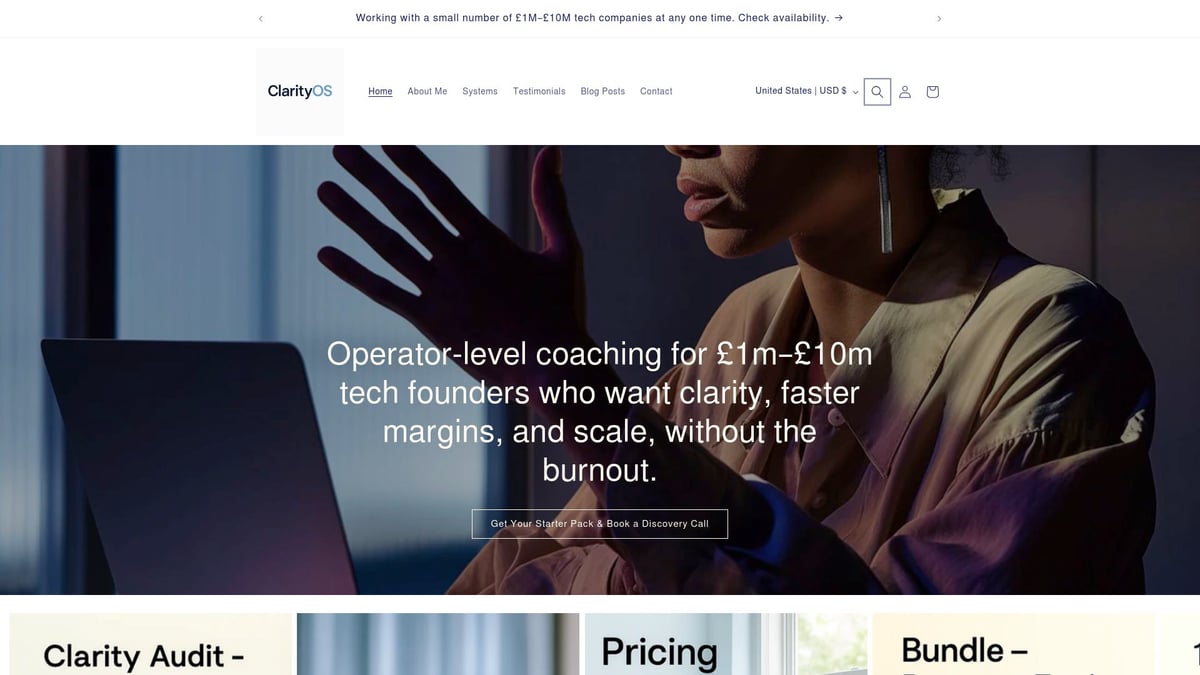
Unlike coaching, you get operator-level support and hands-on system install. Qualified founders can book a Free Reality Review (£1,250 value) to see the difference. Proven results: increased margin, faster cycles, scalable growth. Apply now and unlock a commercial system that scales beyond the first call.
Metrics and Evidence: Proving Discovery’s Impact
Discovery calls educate but do not decide. That is the reality for commercial leaders in SaaS, AI, and Web3. To prove the impact, you need hard metrics, not just gut feel. The numbers below show how founders can track, benchmark, and optimise their discovery process for real commercial results.

Key Metrics to Track Post-Discovery
You cannot fix what you do not measure. The most effective founders track these metrics to prove that discovery calls educate but do not decide:
- Pipeline velocity: Days from discovery to closed deal.
- Win rate: Percentage of qualified leads that convert.
- Pricing uplift: Change in average deal value post-discovery.
- Margin impact: Gross margin per deal.
- Stakeholder engagement: Number of decision-makers involved.
For example, a SaaS founder tracking pipeline conversion weekly found a 20 percent uplift in margin after installing a disciplined discovery process. These metrics reveal if your discovery calls educate but do not decide, and if your team is building real pipeline, not just busywork. The B2B Buyer First Best Practices Report 2024 provides further insight into how leading teams handle discovery and qualification.
Common Pitfalls and How to Avoid Them
Discovery calls educate but do not decide, but many teams fall into the same traps:
- Relying on gut instinct, not data.
- Failing to follow up with all stakeholders.
- Letting discovery notes go stale in the CRM.
- Chasing the wrong next step or pushing for a close too soon.
An AI company recently lost a seven-figure deal due to poor follow-up after discovery. To avoid this, run a weekly review of all discovery calls, check that every stakeholder is engaged, and update your notes in real time. Aligning sales and marketing teams is essential to prevent these mistakes and ensure the entire buying committee is mapped and nurtured. The bottom line: discovery calls educate but do not decide, so use a system to track and act on every insight.
Benchmarking Against Competitors
How do your numbers stack up? Top-performing SaaS, AI, and Web3 founders benchmark their discovery calls educate but do not decide process against industry peers. Here is what the data shows:
| Metric | Top Quartile | Median |
|---|---|---|
| Discovery-to-Close (days) | 42 | 60 |
| Average Deal Size (£k) | 120 | 80 |
| Margin (%) | 38 | 24 |
| Discovery Calls per £1m Pipe | 28 | 14 |
A Web3 firm running 2x more discovery calls per £1m pipeline outperformed competitors on win rate and deal size. Founders who treat discovery as a repeatable commercial system, not a one-off event, see the biggest gains. Remember, discovery calls educate but do not decide, but disciplined benchmarking turns learning into margin.
Commercial ROI of Modern Discovery
What is the commercial payoff? When discovery calls educate but do not decide, the results are measurable:
- 30 percent faster close rates for SaaS founders using a structured process.
- 3x ROI on discovery call investment.
- Higher win rates and pricing power.
Education-first discovery is now the commercial edge. Founders who install a system, track the right metrics, and avoid the old-school close mentality will see more pipeline, more margin, and more control. In 2025, discovery calls educate but do not decide, but they absolutely drive growth when measured and managed.
As you’ve seen, discovery calls are no longer about hard closing—they’re about building trust, educating with insight, and laying the foundation for real commercial results. If you’re ready to turn conversations into qualified pipeline and unlock the clarity and margin growth your business deserves, let’s take the next step together. I invite you to experience the difference operator-level coaching and proven frameworks can make for your leadership and your business. If you want to see how this approach could work for you, [Book a discovery call](Let’s connect and talk) and let’s explore what’s possible.