

The Essential Guide to Systemise the Business (2026)
Most tech businesses hit a wall after £1m revenue. Chaos creeps in, founders become bottlenecks, and margins slip away. Growth stalls, teams burn out, and the messy middle takes hold.
If you want to break through, you must systemise the business. In 2026, scaling SaaS, AI, or Web3 companies demands more than hustle. It requires structure and operating discipline.
This guide goes beyond theory. You’ll get a practical, operator-level playbook to drive growth. We’ll unpack the business case, essential systems, a step-by-step process, common mistakes, and a real-world case snapshot. Ready to move from firefighting to clarity? Let’s begin.
The Business Case for Systemising in 2026
Scaling a tech business past £1m is a minefield. Chaos creeps in, margins slip, and the founder becomes a bottleneck. If you want to break through the messy middle, you must systemise the business. Here is why the stakes are higher than ever in 2026.

The Scale-Up Stalemate: Why Chaos Kills Growth
TechNation’s 2023 survey found 60% of UK SaaS founders blame “operational chaos” as their main growth blocker. When you fail to systemise the business, founder bottlenecks multiply. Decisions slow down, firefighting becomes the norm, and opportunities slip through the cracks.
Margins suffer as pricing gets inconsistent and discounts run wild. Pipeline leaks, win rates drop, and your pricing strategy becomes guesswork. These execution gaps show up early and compound fast.
Buyers in 2026 are sharper, demanding proof of process and reliability. Without robust systems, your business looks risky and unscalable. McKinsey’s 2022 research confirms it: companies with structured operating rhythms grow 2.5x faster. For a practical breakdown of how to escape the chaos and scale, see how to scale a business.
Here’s a real example: a SaaS firm doubled revenue after installing a commercial operating system. They stopped founder-led chaos, aligned teams on processes, and brought discipline to every decision. When you systemise the business, you unlock clarity, speed, and margin.
| Chaos Symptoms | Systemised Outcomes |
|---|---|
| Decision gridlock | Faster execution |
| Margin erosion | Profitable growth |
| Unclear pipeline | Predictable revenue |
Chaos is not a rite of passage. It is a choice. If you want to compete in 2026, you must systemise the business now.
The Cost of Inaction: What Failing to Systemise Looks Like
Ignore systemisation and the fallout is brutal. Teams burn out, top talent churns, and leaders drown in operational noise. Product velocity stalls, you lose sight of your ideal customer profile, and pricing turns into confusion.
When you fail to systemise the business, deals slip away, and your pipeline dries up. According to Beauhurst’s 2023 data, 70% of UK scale-ups never reach £10m revenue. The main culprit? Lack of operating systems.
Here’s what it looks like in practice:
- Leadership overwhelmed by low-value tasks
- Constantly reinventing processes
- No single source of truth for data
- Missed targets and shrinking margins
You cannot outwork chaos. If you want to scale, you must systemise the business before it breaks you. The difference between thriving and stalling is your commitment to structured operations.
Systemising is not optional. It is the foundation for sustainable growth, happy teams, and a resilient business model.
Key Systems Every Scale-Up Needs
Every high-growth tech business hits a wall. Chaos creeps in. Margins shrink. Teams burn out. If you want to scale past £1m and reach the next level, you must systemise the business. The right systems are the backbone of sustainable, profitable growth. Here is what every SaaS, AI, or Web3 scale-up needs for 2026.

The Commercial Model: Pricing, Pipeline, and Margin
Most founders underprice and over-discount, bleeding margin at every deal. To systemise the business, start with a robust commercial model. This means:
- Building a dynamic pricing engine that adapts to ICP needs and market shifts.
- Defining your ideal customer profile (ICP) with crystal clarity.
- Filtering out low-fit, low-margin segments.
For example, a SaaS company overhauled its pricing system, resulting in a 12% gross margin uplift within a single quarter. The commercial model, when built into your core playbook, turns pricing from a guessing game into a growth lever. Regularly review your pipeline quality, win rates, and discounting patterns to keep profits healthy.
Operating Rhythm: Meetings, Metrics, and Accountability
Operational chaos destroys growth. To systemise the business, install a clear operating rhythm. This means weekly, monthly, and quarterly cadences where leaders review critical metrics, make decisions fast, and drive accountability at every level.
Use structured meetings with set agendas and clear owners for every metric. Scorecards and dashboards should be visible to all, with real-time data. According to McKinsey, companies with strong operating rhythms grow 2.5x faster. Want to dig deeper? See the proven frameworks for implementing an operating rhythm in scale-ups.
One AI firm cut churn by 30% after installing weekly review loops. The right rhythm reduces firefighting, speeds up decision-making, and builds execution muscle across your team.
Leadership and Delegation: Killing the Founder Bottleneck
When you systemise the business, you must move from founder-led to operator-led. If every decision routes through you, growth stalls and your time disappears. The solution is to:
- Build a real leadership bench.
- Delegate repeatable tasks with clear documentation.
- Focus founders on strategic, not tactical, work.
A Web3 CEO freed up 15 hours per week by systemising delegation, letting leaders own outcomes. Operator-led scale means you spend less time in the weeds and more time unlocking market opportunities. Document what to let go and what only you can own.
Data and Automation: Scaling Without Headcount Bloat
Manual reporting and scattered data kill speed. To systemise the business, automate routine decisions and workflows. Use integrated SaaS tools to ensure every team works from a single source of truth. Data hygiene is non-negotiable.
Automate onboarding, reporting, and customer touchpoints. One company reduced manual reporting by 80% with the right automation stack, freeing time for higher-value work. The end result: you scale faster without ballooning your headcount.
The path to scale is clear. Systemise the business with these four core systems, and you set the foundation for margin, focus, and growth in 2026.
7-Step Playbook to Systemise Your Business in 30 Days
Scaling past the messy middle is not luck. It is method. If you want to systemise the business and unlock repeatable growth, you need a proven plan. Here is your 30-day, operator-level playbook to cut chaos, drive margin, and free your time for strategic moves.

Step 1: Reality Review—Diagnose the Chaos
Start with brutal honesty. Audit every current system, process, and decision bottleneck. Where are you leaking margin? What blocks execution? Use a growth scorecard to benchmark your business and expose the real issues. For practical templates, see the Business scorecard template.
One SaaS founder discovered £250k in lost margin simply by mapping processes. To systemise the business, clarity comes before action.
Step 2: Define the Commercial Model and ICP
Next, sharpen your commercial edge. Map your ideal customer profile. Review pricing, discounting, and segment focus. Cut low-value segments. Double down on high-fit, high-margin clients.
After an ICP reset, an AI scale-up increased win rate by 18 percent. This step is vital if you want to systemise the business for profitable growth.
Step 3: Install the Weekly Operating Rhythm
Build a cadence. Set up weekly, monthly, and quarterly meetings. Assign clear metric owners. Introduce scorecards and decision forums. This rhythm closes execution gaps fast.
A Web3 team halved their decision time by switching to a structured operating rhythm. To systemise the business, meetings must drive outcomes, not just discussion.
Step 4: Build Out Leadership Roles and Delegation Paths
Stop being the bottleneck. Identify leadership gaps. Hire or promote to fill them. Document repeatable tasks and delegate. Make sure you own only what matters most.
One SaaS CEO transitioned sixty percent of operations to their leadership team. When you systemise the business this way, you create space for real strategy.
Step 5: Automate and Document Core Processes
Find every repetitive task. Automate it. Choose the right SaaS tools to connect your workflows. Write step-by-step SOPs for onboarding, reporting, and delivery.
An AI business cut their onboarding time from 21 to 7 days with automation. To systemise the business, automation is your margin engine.
Step 6: Launch the Pricing Reset Sprint
Now, tackle pricing. Audit all current prices, discounts, and terms. Update your commercial model. Train sales and customer success on the new approach.
A SaaS company added £400k ARR after a rigorous pricing sprint. If you want to systemise the business and boost profits, this is your lever.
Step 7: Review, Optimise, and Lock the System
Systemisation is not a one-off project. Schedule monthly reviews. Refine every process. Build feedback loops into your team’s workflow.
One SaaS firm sustained 30 percent YoY growth with quarterly system reviews. Systemise the business, lock the gains, and stay ahead.
How Operator-Level Frameworks Accelerate Systemisation
Chaos and complexity kill growth. The answer is not more hustle, but a better way to systemise the business. Operator-level frameworks are the missing piece for founders stuck in the messy middle. They turn gut feel into repeatable playbooks, shifting the business from firefighting to focused execution.
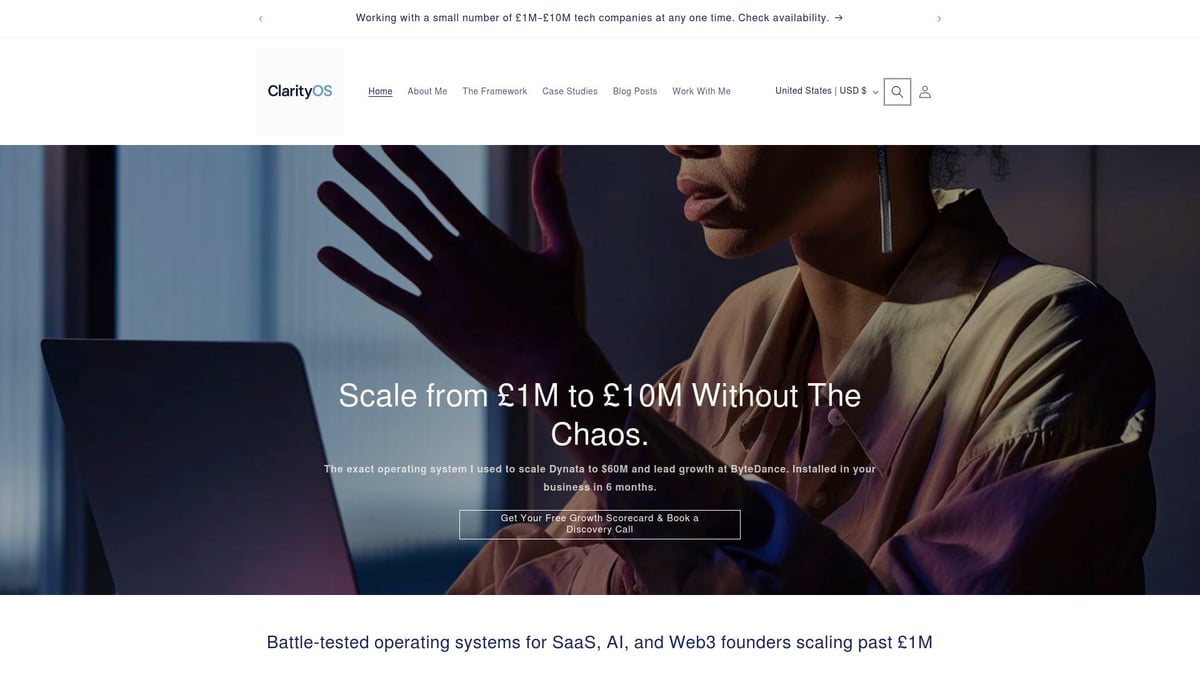
These frameworks are not theory. They are proven, commercial operating systems designed for SaaS, AI, and Web3 scale-ups. Companies that systemise the business with these frameworks see margin gains, faster pipeline growth, and consistent pricing discipline. According to McKinsey, structured operating rhythms drive 2.5x faster growth. The impact is clear: one SaaS firm doubled revenue within 12 months of installing a commercial system.
What sets operator-level frameworks apart? They install discipline and accountability where founder intuition once ruled. This is where most scale-ups stall. Everything routes through the founder, slowing decisions and draining energy. By embedding operator-level models, you break the cycle. External operators bring the clarity, cadence, and commercial focus needed to systemise the business for scale. For an in-depth look at how founder bottlenecks hold companies back, see Overcoming founder bottlenecks.
The results speak for themselves. One founder moved from 80% firefighting to 80% strategic focus in just 60 days. The business gained clear metrics, a growth cadence, and a leadership team that owned outcomes. The founder finally had space to drive vision, not just operations. This shift is only possible when you systemise the business with frameworks and external support, not just more tools.
Ready to act? Accessing operator-level frameworks means more than templates. You get battle-tested scorecards, action plans, and a step-by-step install for your commercial model, operating rhythm, and leadership. If you want to systemise the business for growth in 2026, start with a reality review and see where your chaos is costing you.
Common Mistakes and Kill List: What to Stop Doing Now
Most founders hit a wall as they try to systemise the business. The same mistakes repeat: firefighting, founder bottlenecks, and chaos that drains profit. If your pipeline is shrinking, your team is burning out, or you are stuck in the weeds, you are not alone. Here is what stalls growth, with hard numbers and a playbook to fix it fast.
The Top 7 Systemisation Mistakes
Trying to systemise the business without a clear plan leads to costly errors. Let us break down the seven most common mistakes made by SaaS, AI, and Web3 founders aiming for scale.
- Relying on founder intuition, not data. Decisions get slower and less accurate as the business grows. Gut feel does not scale.
- Overcomplicating processes and tools. More tools, more dashboards, more confusion. Simplicity wins.
- Delaying leadership hires and delegation. Founder bottlenecks cripple speed and morale. Leadership gaps block execution.
- Ignoring pricing and margin leaks. Underpriced deals and discounts drain profit. Most founders do not review pricing often enough.
- Running meetings with no outcomes. Time wasted in updates with no decisions made. Execution stalls.
- Failing to document or automate. Knowledge stays in people’s heads. Tasks get missed, errors creep in.
- Treating systemisation as a one-off project. Systems are never “done.” They need review and optimisation.
Research shows over 60 percent of UK tech scale-ups fall into these traps, stalling between £1m and £10m revenue. According to TechRadar on Scale-Up Failures, the absence of robust systems is a prime reason why so many promising businesses plateau.
If you want to systemise the business and unlock growth, avoid these pitfalls.
Kill List: Immediate Actions to Eliminate Chaos
Ready to move from theory to action? Here is a kill list for founders who want to systemise the business and see results in the next 30 days.
- Stop founder-led sales and all-hands meetings. Let commercial leaders own the pipeline. Focus founder time on strategy, not deals.
- Kill manual reporting and ad hoc decision-making. Automate dashboards. Set decision cadences. No more chasing numbers.
- End reactive pricing changes and “one-off” deals. Standardise pricing. Train teams on the new commercial model.
- Cut out founder bottlenecks in every process. Map decision flows. Delegate, document, and move routine work to operators.
The numbers are clear. As highlighted in the Beauhurst's Scaleup Index, 70 percent of UK scale-ups that fail to systemise the business never reach £10m. Those that act quickly see pipeline growth, higher win rates, and less churn.
Case in point: One SaaS firm added £1m to their pipeline in a quarter after removing founder bottlenecks and automating reporting. Systemise the business, and you unlock capacity for growth.
If you are ready to make the jump, start with a Reality Review or Pricing Reset Sprint. Move from chaos to clarity. Your team, your pipeline, and your margin will thank you.
Case Snapshot: Systemising for Scale—A £5m SaaS Story
Scaling a SaaS business past £5m is rarely a straight line. Most founders hit a brick wall of chaos, margin erosion, and leadership overwhelm. This case snapshot shows how one UK SaaS firm managed to systemise the business, break through the bottleneck, and unlock sustainable growth—without burning out the team or the founder.
The Before: Chaos, Margin Leaks, and Founder Overwhelm
At the £5m mark, this SaaS business was stuck in a loop of daily firefighting. There was no operating rhythm, so meetings were ad hoc and often missed key decisions. The founder was the bottleneck for every major choice. Metrics were unclear—nobody could say with confidence what their win rate or pipeline health really looked like.
Pricing was inconsistent. Deals were often discounted on the fly. The team felt stretched, morale was low, and burnout was rising. Pipeline velocity slowed, and high-fit customers were slipping away. Margin leaks were everywhere, but nobody could pinpoint the source.
This is not unusual. According to BCG on Large-Scale Tech Programs, most tech scale-ups fail to execute because they lack the operational discipline and structure needed to systemise the business. The cost was clear: missed targets, wasted effort, and a founder on the brink of exhaustion.
The After: Structured Growth and Margin Expansion
Within 30 days, the leadership team made the decision to systemise the business. They installed a commercial operating model, bringing weekly and monthly cadences to meetings and reporting. Scorecards tracked the ten key metrics that actually drove pipeline, margin, and win rate.
Pricing was reset. The company defined its ideal customer profile and focused only on high-margin, high-fit segments. Automation took over manual reporting, freeing time for strategic work. Leadership roles were clarified, with clear delegation paths and accountability for outcomes.
The results were immediate:
- Margin increased by 14% within two quarters
- Pipeline velocity doubled, with deals closing 40% faster
- Founder reclaimed 20 hours per week, shifting focus to strategy
- Team morale and retention improved, burnout dropped sharply
By choosing to systemise the business, the company turned chaos into clarity and created a strong foundation for future growth.
Lessons Learned and Action Steps
What did the team learn from this transformation? First, systemise the business before chaos becomes unmanageable. Early intervention is cheaper than fixing a broken engine at scale.
Second, focus on commercial systems: pricing, pipeline, and ICP. Get these right and the rest follows. Third, install a regular operating rhythm. Weekly reviews and scorecards keep everyone aligned and accountable.
Practical steps for founders:
- Audit all current processes and identify margin leaks
- Reset pricing and kill low-value segments
- Assign ownership for each key metric
- Automate reporting and document core workflows
- Review and refine systems every month
Systemise the business and you move from firefighting to growth mode in weeks, not years. This case proves that installing the right systems can unlock 30% year-on-year growth, margin expansion, and a founder who finally has time to lead.
If you recognise your business in the challenges we’ve covered—from founder bottlenecks to operational chaos—you’re not alone. Systemising isn’t just about installing processes; it’s about unlocking clarity, freeing up your time, and building a business that grows without burning out your team or eroding your margins. At ClarityOS™, I guide tech founders like you through proven frameworks that turn complexity into structured, scalable growth. If you’re ready to see what a tailored system could do for your business, let’s connect and talk about your next steps.
[Book a discovery call](Let’s connect and talk)